FutureLakes is pioneering the transformation of lake restoration across Europe by demonstrating a suite of wide-ranging in-lake and catchment innovations. By embracing nature-based, circular economy, and biodiversity-focused solutions, new approaches for pollution reduction and nature restoration in lakes are showcased.


FutureLakes
Project Description
WHO WE ARE
- Regional or local (public) authority;
- NGOs, foundations (public and private), professional association, community-based organisations including civil society and citizen associations;
- SMEs and Large Entreprises;
- Cultural and Educational organisations;
- Research organisations and academia
COUNTRY & REGION
Demonstration and Innovation sites across Europe and associated regions
DURATION
From 10/2024 to 09/2027
Number of Months: 36
KEY WORDS
- Restoration
- measures
- lakes
CHALLENGE & OBJECTIVE
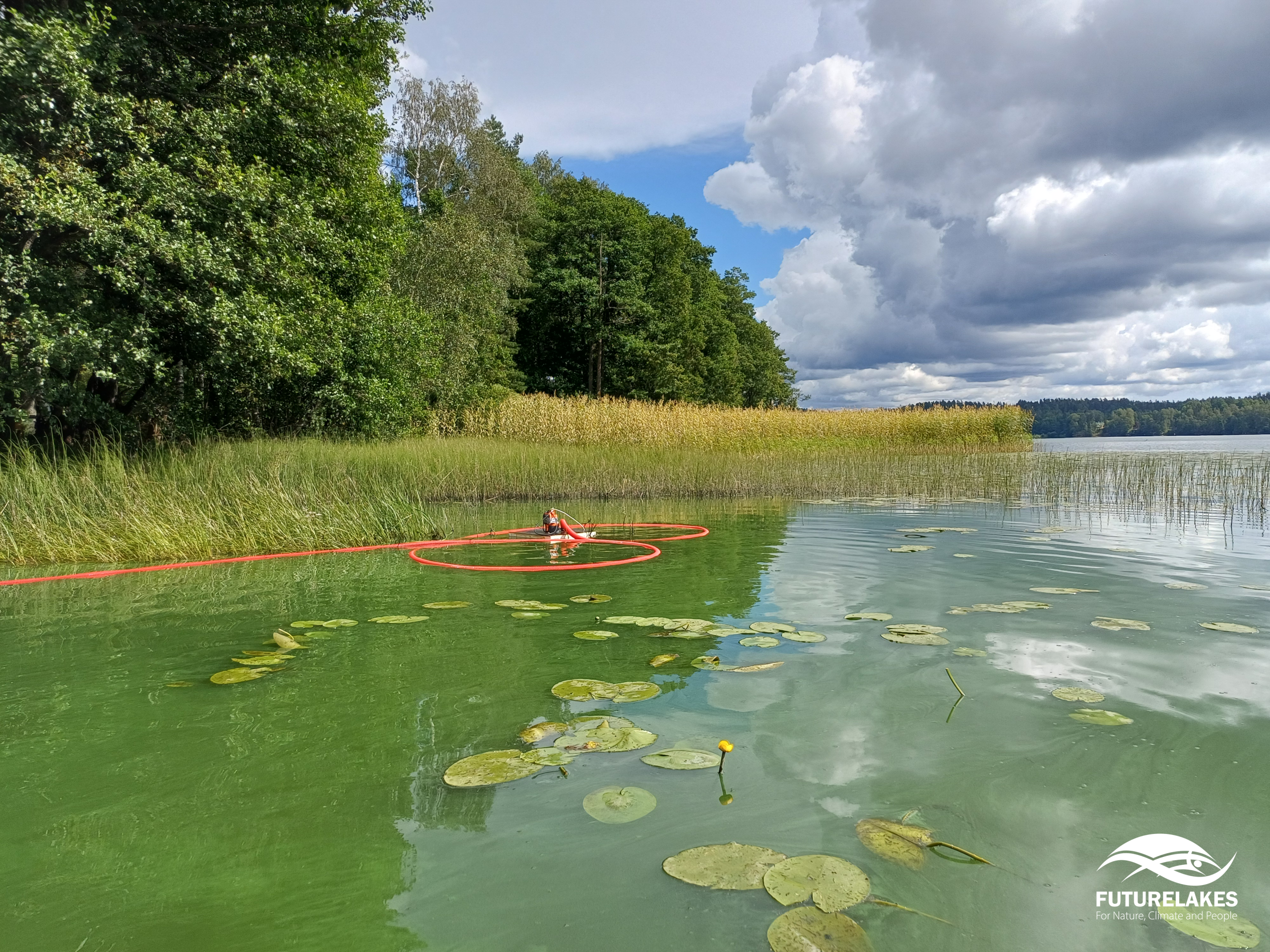
FutureLakes is on a mission to combat the myriad threats endangering lake ecosystems, from nutrient pollution and over-abstraction to increasingly frequent and damaging extreme weather events associated with climate change. With nearly 50% of European lakes failing to achieve good ecological status and only 19% achieving good chemical status, with minimal progress over the past decade, the urgency for transformative action is undeniable. The most widespread pressure is nutrient pollution, with 32% of lakes impacted from wastewater discharges and agriculture. Even when pollution from sewage has been stopped, many lakes are affected for decades by legacy nutrient pollution accumulated in their sediments. Climate change is exacerbating water quality problems, particularly storm events leading to increasing loads of untreated sewage.
In response to nutrient pollution and a warming climate, we see widespread and escalating harmful algal blooms, which threaten our water supplies, recreational use and tourism. Another consequence is that over 25% of wetland and freshwater species in Europe are classified by the IUCN as endangered or threatened with extinction. The imperative for a transformational approach to lake restoration has never been clearer
SOLUTIONS & ACTIONS
Across the Future Lake Demo sites, examples of restoration measures aimed at improving lake health for biodiversity and community benefits are profiled:
Lake Ijssel, Netherlands has improved biodiversity by creating and improving habitat for wetland birds. Opportunities for bird-watching tourism have been developed.
Lake Vesijärvi, Finland and Lake Vansjø, Norway have used catchment measures, and at Vesijärvi in-lake manipulation of fish communities, to significantly reduce cyanobacterial blooms.
Lake Ormstrup, Denmark and Kartuzy Lakes, Poland are testing circular-restoration methods to recover nutrients from lake sediments for use in agriculture.
END USERS
Multiple
COMMUNITY ENGAGEMENT NEEDS
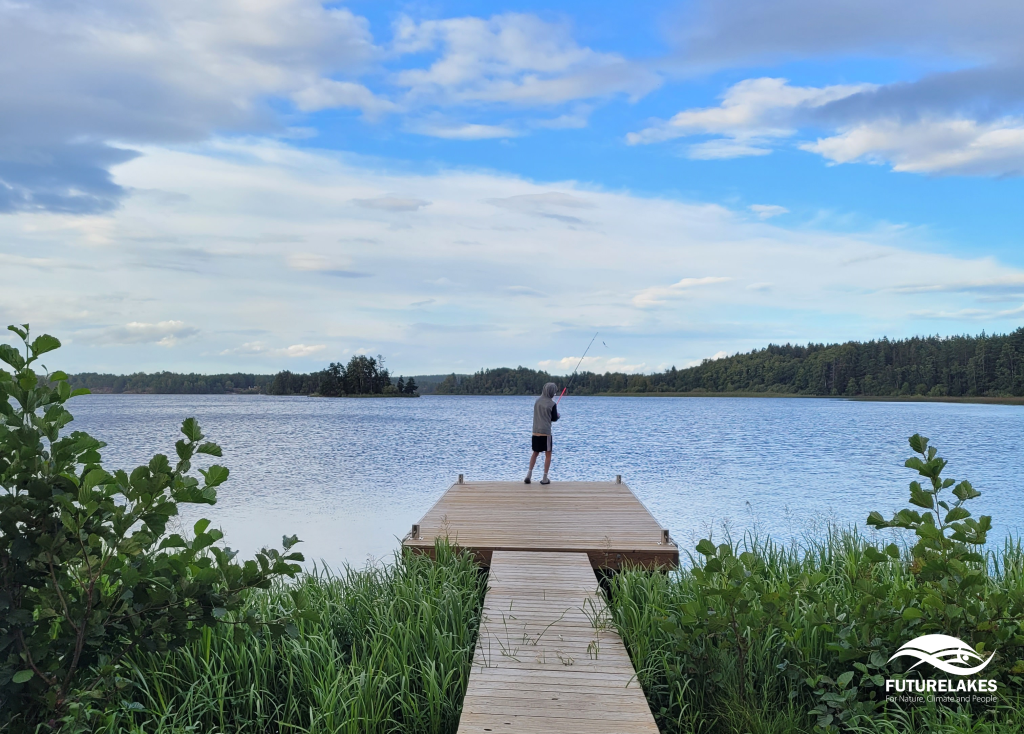
All of these Demonstration and innovation sites aim at improving water quality and the natural environment to support the local communities. This includes successfully reducing algal blooms at 4 Demo sites to improve recreation and tourism opportunities and restoring water levels to support irrigation for agriculture. The aim is to develop and identify measures that can be scaled up and replicated across Europe.
Community engagement happens in different ways across the demonstration sites. In all Demo sites, community engagement has included direct collaboration with landowners, anglers, local residents, and interest groups, citizen-science monitoring. The main benefits are more inclusive lake basin management, stronger local ownership, increased knowledge of water quality and biodiversity, and more recreation and livelihood value from the lake.
Co-creation workshops, digital platforms, training, citizen science programs, and partnerships with local actors ensure active and continuous engagement.
Diversified income opportunities, increased local ownership of marine resources, improved skills and employment, strengthened community resilience, and enhanced stewardship of coastal ecosystems.
COMMUNITY ENGAGEMENT MEASURES
All Demo sites have run community workshops to discuss the most important citizen science activities that could be undertaken – informed by a citizen science catalogue and guide for lake communities, structured in relation to the three Mission Ocean and Waters goals.
Specific training workshops have been organised on “running a BioBlitz (biodiversity survey) using iNatuarlist, running a water quality monitoring campaign using the Aquaity app and monitoring and managing public health risks using the “Bloomin’ Algae” app. Citizen science campaigns have started at all 6 Demo sites and will continue through to 2027.
Other community engagement measures include:
- Landowners involved in monitoring and improving water protection structures such as sedimentation pools and wetlands, and they are given simple tools for monitoring and maintenance (Vesijärvi, Vansjø, Loch Leven).
- Local fishermen help collect fish migration and catch data, which supports improved knowledge and fishery management (Vesijärvi, Loch Leven).
- The Vesijärvi Foundation (Finland) organises “water quality observation days” to involve residents in monitoring water transparency and algal blooms through a citizen science approach.
- Loch Leven and Vansjø organise “Lake Days” to increase community engagement and celebrate the local lake. These include educational activities on biodiversity and biomonitoring of water quality in addition to publicising and training in citizen science activities (Biodiversity recording and Bloomin’ Algae)
The Vesijärvi Foundation (Finland) organises an international conference on lake restoration (“Lahti Lakes”) and networking to share best practices and extend local learning and participation.
COMMUNITY ENGAGEMENT BENEFITS
Benefits for people and lakes
In 4 of the Demo sites (Lake Vesijärvi, Lake Vansjø, Kartuzy Lakes, Loch Leven) the restoration programme has reduced pollution. The improved water quality has reduced blue-green algae blooms, making the lake clearer and more usable and led to a recovery in freshwater biodiversity.
The programmes have seen big improvements for fisheries (Loch Leven), recreation (Vansjø, Vesijärvi, Kartuzy, Leven) and tourism (Ijsselmeer, Leven).
The project strengthens local awareness and commitment because residents and organisations are actively involved in managing their own environment.
It also supports livelihoods and local use by improving fisheries, reed use as a raw material, and the overall attractiveness of the area.
More broadly, the restoration programmes have been demonstrated to be economically worthwhile, with benefits exceeding costs in most of the Demo sites.
The restoration programmes at the six Demo sites are not only about ecological repair; they demonstrate the importance of building a social network around a lake. Recognising that long-term restoration depends on local people continuing the monitoring, supporting the financing, and even some behaviour changes to help sustain improvements after project funding ends.
OUTPUTS
- FutureLakes Blueprint: A core (online) guide that integrates best-practice in technological, social, and economic strategies for lake protection and restoration.
- Roadmap for Upscaling European Lake Restoration: A strategic plan to replicate successful restoration models across Europe, identifying priority lakes and matching them with effective measures to support EU national restoration plans.
- Knowledge Hub and eLakes: A central platform to share lessons, best practices, tools and research results from the project’s six flagship demonstration sites and ten pilot studies.
- Innovative Solutions Portfolio: A review and demonstration of innovative technical restoration measures (circular, nature-based, and biodiversity-focused solutions) including phosphorus recovery from sediments and algal harvesting.
- Governance, Business models and Financing Guidance: Practical advice on how to build more inclusive stakeholder collaborations, business models for restored lakes and attract green financing to make lake restoration economically sustainable.
- Associated Region Action Plans: Tailored restoration and management plans developed through technical assistance for three regions partnering with the project (Cyprus, Ireland and Ukraine).
These outputs essentially act as a “toolkit” for policymakers, lake managers, and communities to help them move beyond theoretical restoration and implement proven, sustainable strategies in their own local basins.
OUTCOMES
- Environmental impacts: FutureLakes aims to improve the ecological and chemical status of lakes, reduce pollution, restore biodiversity, and make lakes more resilient to climate change. The project also includes nature-based and biodiversity-focused solutions, plus recovery of nutrients and excess biomass from lakes
- Economic impacts: FutureLakes is designed to recover valuable resources and support a circular blue economy, including new uses for recovered phosphorus, biomass, and other lake materials. It also aims to stimulate green financing and develop business models to show how restoration can generate practical economic value, not just ecological gains
- Social impacts: The project expects to improve the services lakes provide to people, strengthen public engagement, and make society more resilient to climate impacts. It also emphasizes more inclusive water governance, citizen science, and better water literacy, so local communities and sectors can help shape restoration outcomes.
Project Details
Category
Community-Led Pilot Action Use Case Scenarios