Living Lab Utrecht – PFAS in the Northeast Atlantic Sea Region
BlueActionAA / Living Lab Utrecht – PFAS in the Northeast Atlantic Sea Region
Project Description
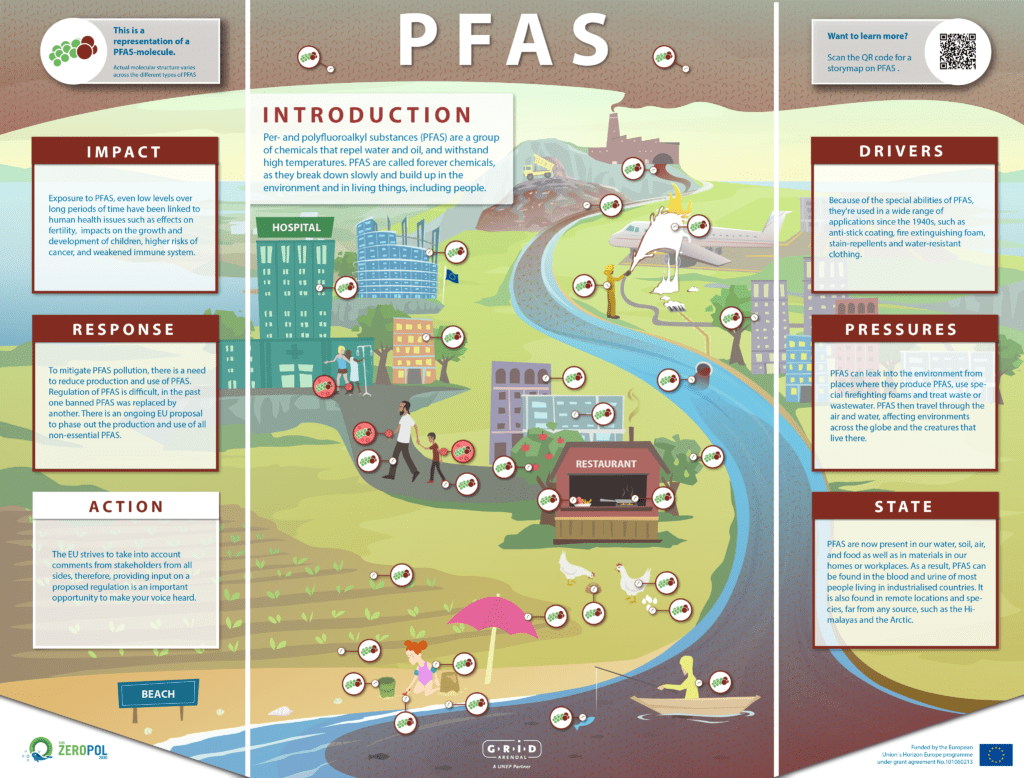
Three Living Labs were organised as part of the EU-funded Source to Sea: Zero Pollution 2030 (SOS-ZEROPOL2030) project, which aims to deliver a stakeholder-led zero-pollution framework for achieving the European Union’s long-term ambition of ‘Zero Pollution’ in European seas. On April 23rd-24th 2024, a Living Lab was organised in Utrecht by Wageningen University & Research, in collaboration with the partners of the Source to Seas- Zero Pollution 2030 project. The objective was to identify governance gaps and challenges to eliminate or reduce the usage and emissions of PFAS, which are chemicals known for their resistance to environmental degradation and potential harm to humans.
The final group of participants comprised of 15 external participants and 8 project team members. The external participants included Dutch, Belgian and Swedish representatives of manufacturers, hospitals, research institutes, water authorities, government bodies and NGOs. The programme of the Living Lab sessions enabled the creation of new substantive knowledge around the complexity of addressing marine pollution and exploring governance gaps and challenges and best practices and future opportunities.
WHO WE ARE
- Regional or local (public) authority
- NGOs, foundations, community-based organisations
- Cultural and Educational organisations
- Research organisations and academia
COUNTRY & REGION
Netherlands (Utrecht)/ North-East Atlantic
DURATION
From Year 2024 to Year 2024
Number of Months: 1
KEY WORDS
- PFAS
- Medical sector
- Zero marine pollution
CHALLENGE & OBJECTIVE
Marine contamination and pollution occur as a direct result of human activities taking place on land, and PFAS from the medical sector emerging a big concern in the North-East Atlantic. The objective was to identify governance gaps and challenges to eliminate or reduce the usage and emissions of PFAS, which are chemicals known for their resistance to environmental degradation and potential harm to humans.
SOLUTIONS & ACTIONS
The Living Lab took place over two days. On the first day, the focus was on the current situation in terms of challenges and governance gaps throughout the product lifecycle (production of the raw material, manufacturing (process) of the final product, usage, and end-of-life). The second day focused on the steps to be taken to reduce or eliminate PFAS throughout the product lifecycle, the needs and preconditions and prioritisation criteria. Part of this exercise was to define best practices and opportunities.
Since PFAS emissions can occur in different stages of the product lifecycle, from production to end-of-life, all stages, their respective stakeholder groups and the choices that can be made at each stage were examined in more detail. For this purpose, a diverse group of international experts and stakeholders involved in various capacities across different stages of the product lifecycle were contacted and invited. In total, 49 people were contacted.
COMMUNITY ENGAGEMENT NEEDS
There is lack of awareness about the different types of PFAS, exposure to PFAS and the topic in general. Community engagement is important for awareness raising, capacity building and changes in everyday life and use of products, transparency and advocacy on PFAS prevention and reduction below safe limits with politicians and regional institutions.
OUTPUTS
Regulatory development, stakeholder involvement, transition strategy away from PFAS (cost analysis and PFAS alternatives)
OUTCOMES
- Environmental impacts: Knowledge about the use and emissions of PFAS in the medical sector and mitigation strategies, accounting for environmental impact
- Economic impacts: PFAS strategies including economic viability.
- Social impacts: The findings show the success of the Living Labs methodology in creating novel stakeholder coalitions for co-creation.
Project Details
Category
Transition Agenda Use Case Scenarios